
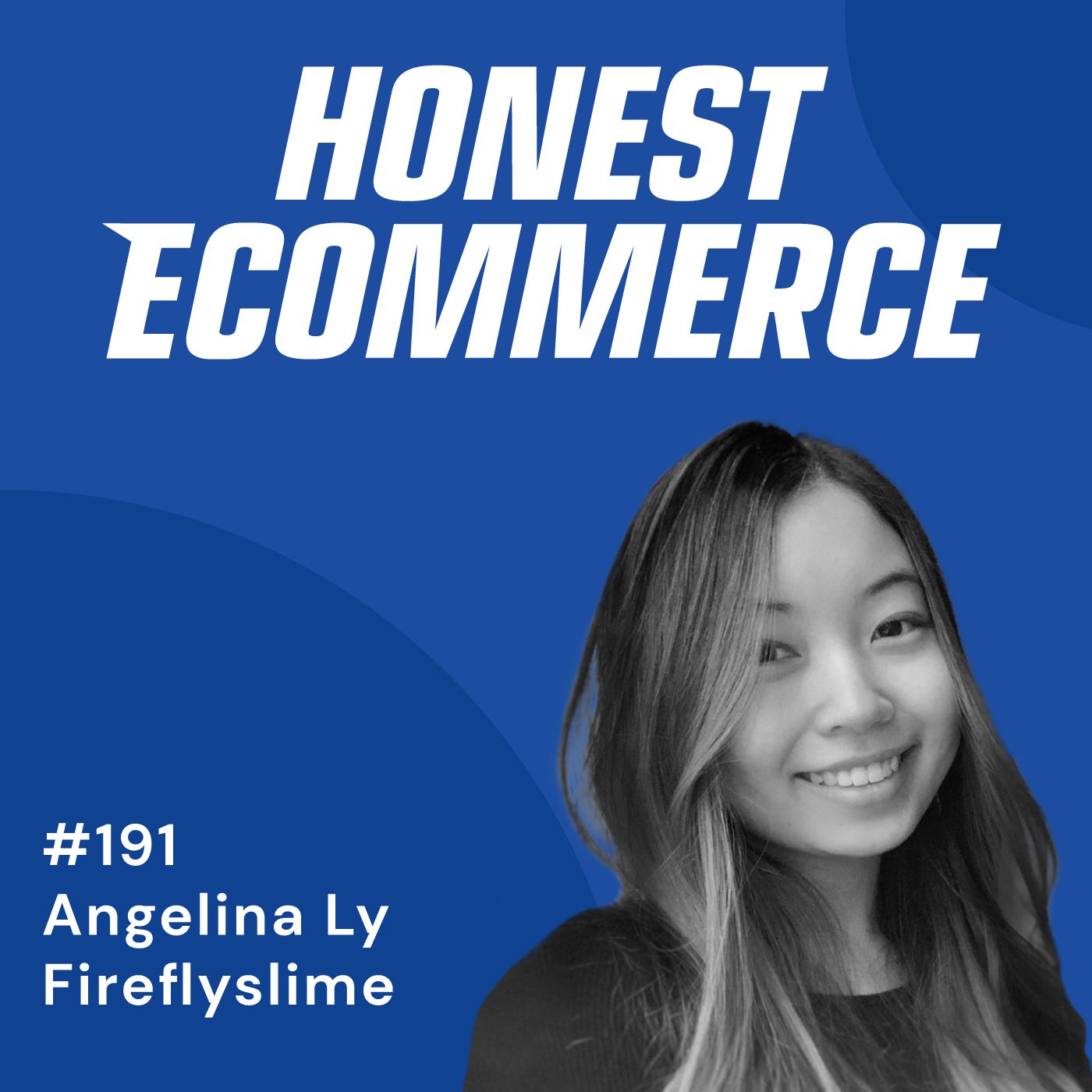
Fireflyslime: Building a Solo Ecommerce Brand With Zero Ad Spend
Angelina Ly has never spent a dollar on advertising. Yet Fireflyslime, the slime brand she launched at 14 years old, has crossed 15,000 sales, built an organic following of 375,000 on Instagram, 120,000 on TikTok, and 20,000 on YouTube, and still sells out every weekly restock. She runs the entire operation alone while attending college full time. The story is worth paying attention to precisely because it rejects the assumption that paid traffic is the only way to scale.
How Fireflyslime Got Its First Sales Without a Marketing Plan
The business started as an accident. Angelina was already into painting, sculpting, and crocheting when slime became her next craft obsession. She posted her creations on Instagram because she saw others doing the same thing, not because she was trying to build a brand. When followers started asking where they could buy her products, she was genuinely confused. That demand signal convinced her to set up an Etsy shop in 2017, and timing worked strongly in her favor. The ASMR and satisfying-content trend was peaking at exactly that moment, so new audiences discovering that category were also discovering her products organically.
Organic Social Strategy: What Actually Drives 375K Followers
The core of Angelina's content approach is consistency and iteration. Posting regularly keeps a brand active in the algorithm and on the Explore page. But consistency alone is not enough. She tracks which posts perform and works to understand why, then replicates what works and improves on it rather than repeating it exactly.
Platform behavior also shapes how she produces content. Instagram was her starting point, where one-minute videos fit the audience. When she expanded to TikTok, she cut everything down to under 30 seconds because attention spans on that platform are shorter. YouTube required a completely different format, longer lifestyle videos running at least 10 minutes. She treats each platform as its own channel with its own production requirements rather than dumping the same asset everywhere. Vivian Kaye of KinkyCurlyYaki followed a similar path, scaling to $1M without paid ads or email by leaning entirely on organic content and platform-native storytelling.
Etsy to Shopify: Why the Migration Was Worth It
Etsy made sense at the start because it has built-in search traffic and requires almost no setup. But Angelina quickly realized most of her buyers were coming from her own social channels, not from Etsy's internal discovery. That meant she was paying Etsy's listing and transaction fees for traffic she was generating herself.
The other issue was brand presentation. Etsy enforces a standard storefront structure that limits how a seller can express their brand identity. Moving to Shopify gave her control over design through themes and custom builds, better analytics to understand customer behavior, and customer support she found more responsive. For any founder whose traffic is already coming from their own channels rather than a marketplace's search function, the fee structure and design constraints of Etsy become hard to justify.
The Inventory Tactic That Improved Both Sales and Time Management
Early on, Angelina kept products permanently listed as available and made them to order as purchases came in. As demand grew, that model broke down. She could not produce fast enough to keep up, and the open-ended queue created unpredictable workload.
She switched to a limited-stock, sell-out model. Each restock has a fixed quantity, and once it is gone, it is gone until the next cycle. This change did two things. First, it created visible scarcity, which drives urgency and helps convert browsers into buyers who know they cannot wait. Second, it gave her a predictable production schedule. She now makes roughly 1,000 products every 30 days against a known quantity rather than an open order book. Urban EDC's Yong-Soo Chung has built an entire business around the same drop model, using limited restocks and email strategy to drive urgency and manage production on a predictable cycle. For a solo operator, that kind of control over time is as valuable as the conversion lift.
Running a Solopreneur Business While in College Full Time
Angelina handles production, packaging, filming, editing, customer service, and supplier relationships entirely on her own, on top of a full course load and internships. Her primary organizational tool is Google Calendar, which she uses to structure every responsibility and deadline across the business and school.
Her workflow stacks tasks by time of day: internship work and meetings in the morning, class in the afternoon, business operations in the remaining hours. The basement of her family home functions as her production and storage space. She acknowledges the setup has real limits and names hiring employees and moving to a dedicated warehouse as her next major goals. The convenience of working from home is real, but it is not a long-term operating model when you are planning to bring on staff.
What Convinced Her Parents the Business Was Real
Her family initially treated Fireflyslime as a hobby with a firm ceiling. With engineers on one side and pharmacists and doctors on the other, the expectation was a conventional professional path. That shifted when her parents attended an in-person slime convention with her. Seeing customers respond to her products face to face, in a venue full of other creators doing the same thing professionally, made the business tangible in a way that shipping boxes out of a basement never had. They have been active supporters since, helping with packaging and post office runs when needed.
Key Lessons From This Episode
- Organic social built entirely around consistency and iteration can scale a brand to hundreds of thousands of followers without paid ads, but it requires genuine attention to what content performs and why.
- If your buyers are coming from your own channels rather than a marketplace's search, you are likely paying platform fees for traffic you are already generating. That math favors owning your storefront.
- A sell-out restock model creates purchasing urgency and gives solo operators a manageable, predictable production cycle instead of an open-ended order queue.
- Platform-specific content is not optional. What works on Instagram at one minute will not work on TikTok at one minute. Audience behavior on each platform determines format, not convenience.
- Starting young and without formal business knowledge is not a disadvantage if you treat trial and error as the primary curriculum. Most of what Angelina learned came from doing, not from courses.
- Family skepticism about an ecommerce business often comes from the invisibility of the customer relationship. In-person selling events can make the business real for people who have never seen a product reach a customer.
Hear the full conversation, including Angelina's take on conventions, the TV competition appearance, and her plans for eventually expanding beyond a one-person operation, in the complete episode and transcript below.
In This Conversation We Discuss:
- [00:00] Intro
- [01:31] What is Fireflyslime and its target audience
- [02:14] From a hobby to explosive growth
- [04:29] Angelina’s social media/organic tips
- [05:44] Platform specific strategies or reusing strategies
- [06:41] Etsy vs Shopify
- [08:35] Sponsor: Electric Eye https://electriceye.io/
- [08:56] Sponsor: Mesa https://apps.shopify.com/mesa
- [09:54] Sponsor: Loop https://loopreturns.com/honest
- [10:37] Sponsor: Klaviyo https://klaviyo.com/honest
- [11:24] Day in the life of a full-time student solopreneur
- [13:09] Take control of your inventory
- [13:58] What does the future hold for Fireflyslime
- [15:05] When Angelina got support from her family
- [16:50] Where to find Fireflyslime
Resources:
- Subscribe to Honest Ecommerce on Youtube
- Experience the joy of slime during playtime or to wind down after a stressful day fireflyslime.com
- Connect with Angelina linkedin.com/in/angelina-ly
- Scale your business with electriceye.io
- Download Mesa at the Shopify App Store apps.shopify.com/mesa
- Transform your returns into exchanges loopreturns.com/honest
- Get started with a free account at klaviyo.com/honest
If you’re enjoying the show, we’d love it if you left Honest Ecommerce a review on Apple Podcasts. It makes a huge impact on the success of the podcast, and we love reading every one of your reviews!
Transcript
Read more

Amit RG, CEO of Richpanel, breaks down why 50% of ecommerce orders generate a support ticket, how no-code automation can resolve 60-70% of those tickets without an agent, and why obsessing over the...
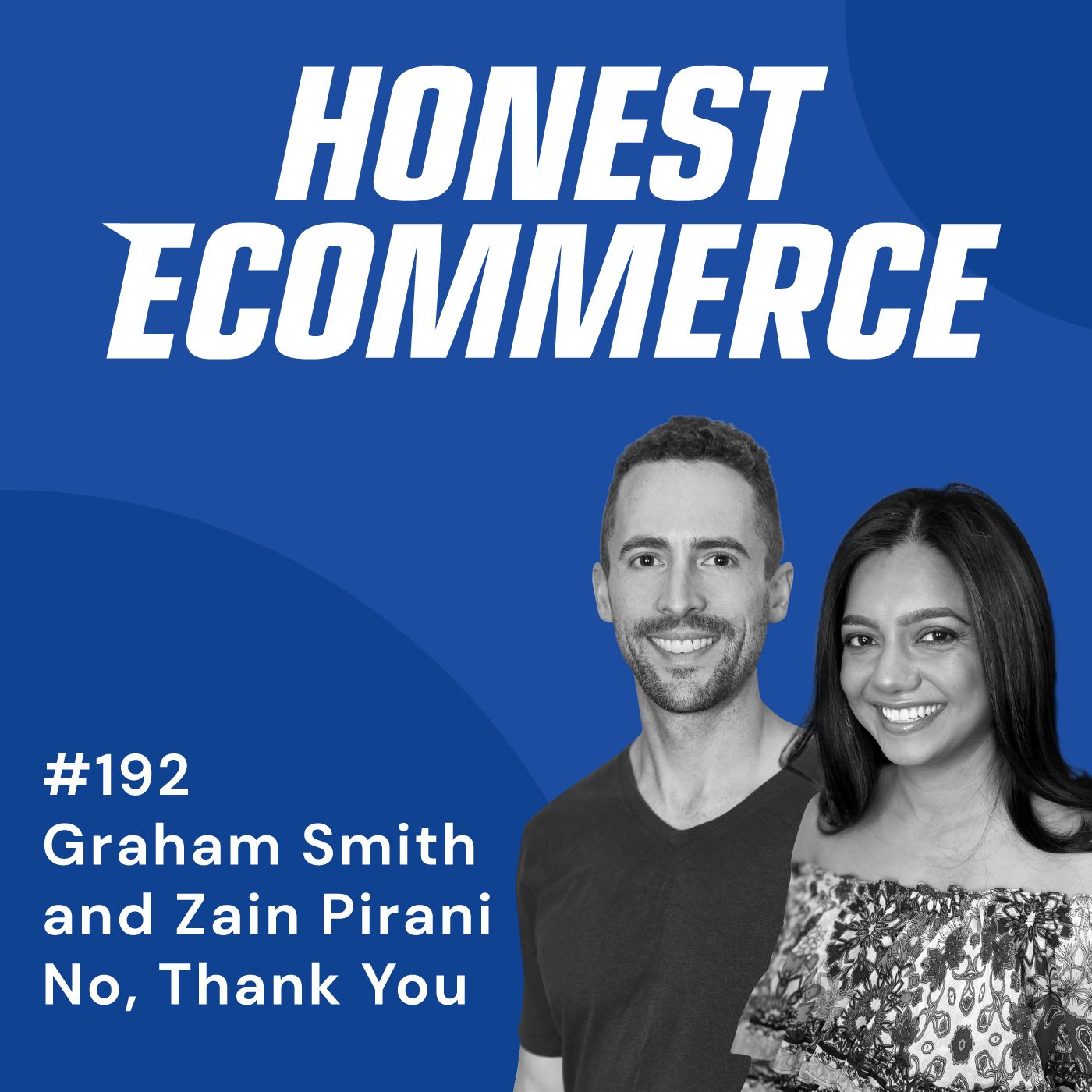
Graham Smith and Zain Pirani left finance careers to build No, Thank You, a CBD skincare brand focused on transparency and ingredient quality. They share a 2-year product development journey, the r...