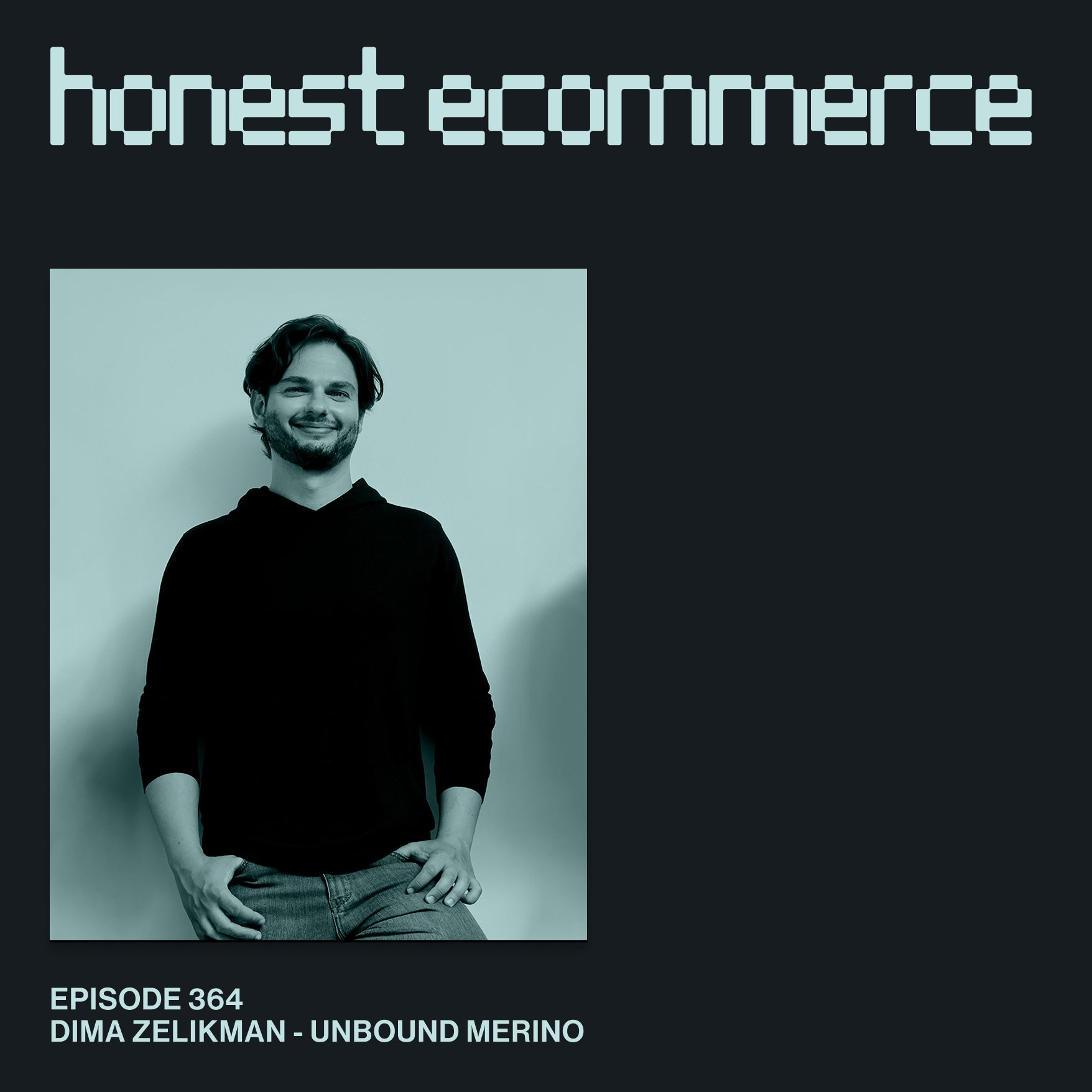
Dima Zelikman
The product needs to be great. Your messaging needs to be clear. And then you need to have a strategy for traffic to get your message and your product out there so that you can then optimize against converting that audience.
Chase Clymer
A cheat sheet or cheat code to everyone out there is having a great product makes stuff infinitely easier. It is so much harder to market trash.
Honest Ecommerce is a weekly podcast where we interview direct-to-consumer brand founders and leaders to find out what it takes to start, grow, and scale an online business today.
Have you hit a wall with performance marketing on Facebook and Google? It might be time to think about where your next customers are spending their time online.
That’s where Realize comes in. Realize helps thousands of D2C brands to tap into more ad placements across hundreds of premium websites - reaching audiences you just can’t find on traditional social channels
With intent-based, contextually relevant ad placements, you can drive real conversions, not just impressions, and expand your acquisition strategy with better data, more control, and higher ROI.
Realize helps you build high-performing AI-powered ad experiences, backed by 17 years of data.
And simple to set up, no bloated dashboards or complicated onboarding so you can start scaling fast.
You can also leverage your own first-party data to retarget people already in your funnel.
So if you’re ready to go beyond Facebook and Google and start reaching new audiences, head on over to discover.taboola.com/honest and we can start the new year with a new performance channel.
That's discover.tabula.com/honest D-I-S-C-O-V-E-R-T-A-B-O-O-L-A dot C-O-M slash H-O-N-E-S-T.
Hey everybody, welcome back to another episode of Honest Ecommerce. Today I'm welcoming to the show Dima, the CMO of Unbound Merino. Dima, welcome to the show.
Dima Zelikman
Thanks for having me, Chase.
Chase Clymer
I'm excited to chat. I need to shout out episode number 77 from back in 2020 where I had your partner Dan on. We're going to try to do our best not to rehash much of what Dan and I's conversation was about. But you know with 5 years of time, I'm sure a lot of people wouldn't mind hearing a few of those things again.
But first and foremost, I guess, for anyone that's been living under a rock and they haven't heard of your brand, what's the quick elevator pitch? What types of products are you guys bringing to market over there?
Dima Zelikman
Okay. So Unbound Merino, we make travel clothing for people who want to minimize the amount of clothing that they want to pack on any trip that they might be taking, whether it's a short trip. Or we have a lot of our customers who are longer term travelers, digital nomads, or people just looking to simplify their wardrobe generally in their day-to-day life with high performance clothing.
And the core focus of our clothing is everything is made from merino wool. So it's in the name, Unbound Merino. Everything we do is focused on using merino wool because we think it's nature's miracle fabric. It outperforms cotton synthetics. It really is. One of the things that we started saying very early on is that it's a game changer, whether you're traveling or in your day-to-day life. So that's what we do.
Chase Clymer
Absolutely. And the products are fantastic. I own a few shirts. And I am one that loves to travel light. I've got a weekend trip coming up here and I'm going to go find those shirts to pack in my bag. Now, I guess let's just quickly take me back in time. What was going on in you and the co-founders lives? Where did this idea come from? Why did you guys want to make this big leap of faith?
Dima Zelikman
Unbound Merino started like a lot of new brands out there. It started with a need. And it started with my co-founder Dan. He went on a trip that he ended up overpacking for. And his luggage ended up bogging him down everywhere he went on this trip. It was like a multi-location trip. He was going from one place to another and he had to end up hauling all this luggage that he packed on this trip up a hill in Greece, I think it was.
Yeah, it was, it might've been in Mykonos or one of those Greek islands. And he basically decided that he was never going to overpack and bring check luggage ever again because it was just such a pain in the ass.
And for his next trip, he started doing this research, like how to pack light, how do I minimize my packing, how to travel with just a carry-on. And he noticed online in the blogosphere and in the travel kind of like tips and tricks, resources out there. He noticed that Marina wool was being recommended because it's antibacterial, it's anti-odor, it's moisture wicking. has all of these natural properties that make it perfect for travel and perfect for re-wearability.
Like you wear a cotton shirt, you have to, you wear it for one day of your day-to-day activities. It smells, it's now laundry. With Merino wool, because it has all of these natural properties, specifically because it's antibacterial, you can wear it again and again and again, even for weeks of travel. So he saw all these resources for it and then he went to go buy it.
But in Toronto, where we are, he really couldn't find it anywhere. Then he was looking online. It was super expensive. Everything, everywhere he looked, it was either not the style that he wanted. It looked like outerwear because it was most at the time before we started Unbound Merino. Merino wool was mostly a base layer kind of fabric. It was in the hiking and outdoor adventure travel space, but nothing really that you could wear.
Sightseeing to a restaurant, you know, for that, usual trip that most people are taking. So he kind of connected the dots in that, “Hey, this is something that's being recommended everywhere I look, but I can't find it.” So that's a business idea. And that was really the catalyst at the time I was working in advertising. I was a creative director. was working on social content, TV commercials, doing it for a number of big brands here in Toronto.
And because I was already in the marketing space and because we were best friends since we were kids. And because we really worked across the street from each other, he asked me to go for a walk. And with our other co-founder, Andrew, we kind of went for a walk and we talked about this opportunity. And I also had two babies at the time and I wasn't seeing my friends a lot.
So more than anything, I just saw this as an opportunity to hang out with my buddies once a week outside of work hours, meet at the bar, grab a drink, do that sort of thing. We worked on that for a full year, just talking, just trying to think about what this product was going to be.
What's this clothing going to look like? What are the needs of people who are traveling? And from there, it was just about making this thing happen, bringing it to life, and then putting it out to market.
Chase Clymer
Running an Ecommerce business means wearing a lot of hats; founder, marketer, customer service, logistics… and let’s be honest, sometimes even therapist.
But one thing you shouldn’t have to stress about? Business insurance.
That’s where Next Insurance comes in.
Next is built specifically for small businesses, including Ecommerce brands, making it simple to get the right coverage entirely online, in just minutes.
Whether you sell handmade candles, athletic wear, or subscription boxes, Next helps protect you from the unexpected, from product liability to shipping mishaps and everything in between.
And here’s the best part: you can save up to 30% on your business insurance and get peace of mind for as low as $1 per day, knowing Next has your back.
With transparent pricing, flexible plans, and instant certificates of insurance, Next gives you the confidence to focus on what matters most - growing your store.
So if you’re ready to protect your business while scaling your brand, head over to nextinsurance.com/honest to get covered today. That’s nextinsurance.com/honest. N-E-X-T-I-N-S-U-R-A-N-C-E dot C-O-M slash H-O-N-E-S-T
How long were you, I guess, moonlighting with the startup and still had your full-time job?
Dima Zelikman
Before we sold a single t-shirt, we worked on it for a full year. And during that time, we were meeting once a week at night and then twice a week in the morning before office hours. So that's three times a week. We did that for a full year, just developing and creating the foundational work of the brand and the clothing itself.
So that was a full year. Then we launched. We launched on as a crowdfunding campaign that was sort of we always intended to be our product market fit test. If this has legs in crowdfunding, if we can get the necessary capital needed to place our first order for manufacturing.
Then we're going to start, it will go out into the DTC world, create a website, launch with Shopify, and then create that business. So that was a full year. We did the crowdfunding. That was three months of campaigning. Through a crowdfunding campaign. That was a huge success. We were like, all right, we have a business here.
And then shortly thereafter, we launched our Shopify site. And then I left my job knowing that this was going to be my new job. Three or, I wanna say four months after that, four or five months after that.
Chase Clymer
So a little under two years.
Dima Zelikman
Yeah, under two years, I was kinda doing this as a side hustle thing. Working from my desk when no one was looking.
Chase Clymer
Yeah.
Dima Zelikman
That sort of thing.
Chase Clymer
Absolutely.
Dima Zelikman
But really, for me, this process of having my office job was really about creative collaboration with my best friends.
Chase Clymer
Absolutely. And then do you remember, I guess, we're going to fast forward through the startup. Because Dan and I talked a bunch about that stuff on the previous episode number 77. Everyone go listen to it. Make those numbers go up. But is there anything that you remember in those first couple years that was either a game changing insight or a big mistake that you guys goofed on?
Dima Zelikman
Like in the early, early days of launching our Shopify store?
Chase Clymer
Mm-hmm.
Dima Zelikman
I think the game changer for us was finding a scalable source of traffic that converts.
Chase Clymer
I mean, that's the problem for every startup.
Dima Zelikman
Converting traffic and knowing the source of it and knowing how you're going to scale up, think is the next, is like where everything after that turns into optimization and finding new inflows of traffic that will convert. So even during the crowdfunding, right? Like on the one hand, yeah, this was a way we were going to raise money because we had no investors. We were doing this totally bootstrap, totally grassroots.
So on the one hand, the goal was to raise some money. But really what we were doing was finding that first inflow of traffic of an audience of people who see our clothing and want to buy it. And from there, we use that as our foundation to find a new source of traffic. And for us, that game changer really was Facebook at the time it was Facebook. Now it's Meta. So it's a little more integrated but meta advertising specifically on Facebook.
Taking all of that foundational work and all that key messaging, everything that we put into the crowdfunding campaign. We literally just adapted it. Turn it into Facebook ads, use those assets, and then turn those ads on, use our list of existing first time customers through crowdfunding to turn that into our lookalike list that we would then scale through Facebook.
And once that traffic started to convert, at first, we didn't know what to do with it because we didn't have enough inventory. So we had to play catch up to the inflow of traffic that was converting with our inventory and our ability to be well stocked, so on and so forth. But that was truly the game changer for us.
Chase Clymer
Do you remember what you and the team were spending on ads back then? I know that's something a lot of brands do. Obviously, it's more expensive now in 2025. But a lot of brands struggle to budget, I guess, for themselves.
Dima Zelikman
We worked with a Facebook marketing consultant guru to teach us the bare bones basics of how to work in this channel. He set our minimums for testing to figure it out. “Okay, well, you got to have a minimum daily ad spend. Once you spend $1,000 on an ad campaign, then you know, then you can optimize and you'll know if you have something that has some lakes.”
We kind of started with that, like figuring out, “Okay, well, if we spend a thousand dollars on this ad set, that means this could be a success if it's converting and scaling from there.” The one thing I will say is from the very beginning, we were optimizing for a profitable conversion because we were bootstrapped, because this was all very kind of like grassroots.
We couldn't lose money on that purchase and expect that we were going to make it back on the second purchase or the third purchase. We weren't playing that game where you optimize for a three or six month lifetime value conversion. We kind of did the math and made sure that we were scaling profitably from day one.
So if you can find that magic number, the minimum just becomes held up in much inventory you have to sell. So that's why I was saying we had to... It wasn't so much the cash crunch, it became the inventory crunch. Having enough cash flow to fund our next purchase of inventory to stock for these ads.
Chase Clymer
Hey everybody, just a quick reminder. Please like this video and subscribe if you haven't. We're releasing interviews like this every week. So don't miss out. Now back to the interview.
And obviously, paid advertising was a great way to capture new customers. But you and I chatted at length a while back about your passion, which is retention marketing, specifically email. Do you still own that world for the company?
Dima Zelikman
I do. So yeah, the first purchase is profitable, but it still costs a lot of money. So we're spending money to create these new customers. The goal is to constantly optimize for 3-month LTV, 6-month. We're measuring our 12 month LTV. We're looking at our cohorts and always trying to grow that number because that just leads to a healthy business.
The analogy that I always bring up in marketing calls with my team and the way I like to think about it is like a leaky bucket. The business is a bucket. There's customers that are, that's your traffic of fresh converting customers is the inflow.
How many taps do you have on, right? You have meta, you have social, you have affiliates. That's your inflow of customers. They're in your pool, but there is churn, right? Customers, some customers may choose a competitor. Maybe they drop off. Some people just wanted to try your product and they didn't come back, but there is a healthy pool. That's the leak, right? That's the churn. There is a healthy pool of people that you're constantly reconverting.
And email is one of those channels where it's the most profitable because it's your owned channel. You own it. You're only paying for platform usage. And it's the most effective. Keeping those customers healthy, engaged, interested in what you're selling. That's my top priority.
Chase Clymer
Absolutely. I think that a lot of young brands are scared to email their lists. They think that they're going to be emailing them too much.
Dima Zelikman
Yeah. I could definitely relate to that. When we first started, we weren't thinking about email at all. And I forget what was sort of the catalyst for it. I think we had some other colleagues in other DTC spaces that were in our network that were like, “You haven't emailed anything yet? You have to turn that on. It's the money button. You push the button and money appears. You have to start doing email.”
And I remember when we first started, we would send an email like all hands on deck. We're going to sweat the details of it. And it's going to be very scary to push send. And we don't want to push too much. First, it started like we would send one a quarter. Then it was like, okay, well, we got to get a new product in to make sure that, you know, it's an interesting thing.
So we would send one, once a quarter, once a month. And then, you know, there was a real game changer during COVID, right when you were talking to Dan during 2020, there was a travel ban. And it's really hard to convert fresh audiences with travel focused ads during a travel ban. So we had to kind of really rethink how we were going to ride out this first two weeks, two months, three months, one year, two years of a huge constraint on travel.
And the strategy that we kind of employed was re-engaging our existing customers with products that were kind of interesting, fresh, limited releases, and urgency. The email channel really became the lifeline of the business for those two years. From there, we kind of unlocked the power of nurturing our customers through email. And since then, we've also plugged in SMS. So the two work in lockstep.
Chase Clymer
Absolutely. It's so funny you said that. It was an all-hands thing. You were belaboring over the emails. And they had to be perfect. Would you say that um the attitude about pressing send is a little more relaxed these days?
Dima Zelikman
You know what's interesting? I think our emails are way better than they were. Because I think the craft and the strategy has just been refined and we're just better at it. We flex that muscle, we've worked that muscle enough where I have a really keen sense and we've done enough testing and so on and so forth that we've gotten much better at the channel and we know what data to look like and the health metrics to make sure that it's a healthy channel for us.
I think that sweating the details thing just came from like that novice that knew that it was just new, right? So, when you're first driving, you're more worried about all the details, but that doesn't necessarily make you a better driver than someone that's more comfortable behind the wheel. I think it's one of those things. I still need every email to be held to a high standard, right?
So, and I needed to be one thing that I'm always thinking about when it comes to email campaigning is that it's, is this something that's relevant for the people that are getting it in their inbox? Cause I subscribe to a lot of brands just to be aware of what's going out there.
Chase Clymer
Market research or whatever.
Dima Zelikman
Market research, yeah. So my inbox is full of just other apparel brands and I see what they're doing. I compare it to ours. And one thing that I am really interested in is when I'm thinking about what kind of, what's our campaign cadence. And what we're putting out there is that it's fresh, it's relevant, it's timely, it has reasons to shop. That's always top of mind.
Chase Clymer
“I have been in business for nearly 20 years, and very few companies I have hired in that time have performed as well as Electric Eye. They have knowledgeable staff, and our project was delivered on time and on budget. Electric Eye has exceeded my expectations, and I look forward to working with them again.”
That is a direct quote from one of our clients at Electric Eye.
Electric Eye is a Shopify Plus partner that has helped over 100 brands migrate, redesign, and optimize their stores since 2016.
If you'd like to increase your conversion rate, average order value, and revenue per session, we are the true Shopify experts you've been looking for.
Right now, we're offering a free diagnostic to qualified brands that reach out and mention the podcast. Visit electriceye.io today to schedule a call and send us a message. Find out why we have over 50 5-star reviews in the Shopify Partner Directory. Again, that's electriceye.io. E-L-E-C-T-R-I-C-E-Y-E.io
Yeah, and I think that you mentioned that you get that muscle memory and I think that the voice and just writing the emails over time does get easier just because you now have an established voice and you know how you want to communicate with your customer.
Dima Zelikman
You have a constant feedback loop. Because we use Klaviyo. So Klaviyo, the data and the custom reporting that you can build, the feedback loop is immediate. So I know when I send a banner and I know when something's soft.
And I can look a peek under the hood and understand, well, the click-through rate on this one wasn't very good. Or the click-through rate was high, but the purchase or the placed order rate was low. Maybe we need to tinker with the conversion of the actual page. The email was great. Every single email tells a story if you just look at the data behind it.
Chase Clymer
Absolutely. When we chatted a while back, I proposed to you if you were going to consult with a brand in 2025 or if you were going to, you started a new business, right? You're like, “All right, I'm excited about this new idea.” Would it be the same? Would you take the same approach? Would it be crowdfunding into paid acquisition? Is that the same growth channel you take? Or do you think there are different strategies you may recommend to try out in 2025?
Dima Zelikman
I think the foundation of the approach, if you're starting with a similar situation where you have identified a market or an ideal customer profile. And you have a product that they need. Maybe you don't have a product that they need, but you've identified a need that's being underserved by what's out there. And your product is going to serve that need in a way that's novel and they would be interested in it.
I think the foundation is still the same. The product needs to be great. Your messaging needs to be clear. And then you need to have a strategy for traffic to get your message and your product out there so that you can then optimize against converting that audience.
Chase Clymer
Dima Zelikman
Yeah. I read Andrew Carnegie's autobiography, and one quote I pulled out from there was like, “Make nothing but the very best.” Everything else. There is no stronger foundation for an endeavor than making nothing but the very best. I kind of butchered that quote. I can get you the exact one if you want me to pause, but that's basically what he said.
He's like, you can compete on price. You can compete on distribution. You can compete on all sorts of things, but the surest foundation for success is to make nothing but the very best. Everything else is just nice to have.
I was actually just recently talking to Dan, maybe a couple days ago, that we were talking about, what's the real X factor of success? Is it the marketing? What is it? And he, without skipping a beat, was like, it's the product. Product is number one.
Chase Clymer
And I fully agree. Yeah. Having a good product, this lends itself into that messaging within your marketing, for one. And the benefits and the features and all that stuff, if you have a good product, that stuff should be standout. And how you differentiate from the market and other products, that stuff should be easy to come up with if you do have an elevated product or a difference, like you said, I actually enjoyed you saying a novel take on solutioning for that problem. It should be easy to come up with these angles.
But to the flip side to grow the business and retention, the absolute secret to retention is, yeah, that product rules. And they like it and they would buy it again. If you're good at marketing, you sell them a piece of sh*t, they are not going to buy another one.
Dima Zelikman
Right. Yeah. Yeah. Nothing will ruin great marketing than a garbage product quicker. So if you want to do a flash in the pan, make a bunch of money quickly and you have an idea for how you're going to blow up, maybe that's a way to launch our short-lived business. But that's no way to create a lasting brand. And I think that's one thing that sets us apart. And why I think Unbound Merino is a lasting brand is not only do we know how to find new inflows of converting traffic and our product, our messaging does.
When we tell people, when we tell the right people about why our clothing would be a great addition to their life and their travels they want to buy it. But the real thing, the real magic is when they use it, they use it again, it's like it is a game changer.
If you've only worn cotton your entire life and you wear merino wool for the first time because we told you about it, you're an evangelist, it's changed your life. You never want to wear anything else ever again. So the product really is the X factor.
Chase Clymer
Absolutely. Now, Dima, is there anything I forgot to ask you about today that you think would resonate with our audience?
Dima Zelikman
Now that I've been at this for like nine years, I've ended up having a number of conversations with people who are just starting out. Right? You have this idea or I'm building this brand. And one thing that I've noticed is entrepreneurs, a lot of the time, I notice they really get into the brand building side of their startup.
They want the brand to be perfect. They want the logo to be the thing that's going to be in their store from here on to eternity. It's like 20 years from now. They just see it. And I can understand why, you know, and that's kind of like in an entrepreneur's nature is to really think big picture like that.
And I think one piece of advice, and I think we've kind of covered it, but I can't stress this enough. Your product is critical. Making sure that you're making something great is critical. The brand is important. I don't see, one thing I don't see is people really understanding what that first pump of traffic that's going to be converting.
Because you can launch the perfect brand, amazing product, and then you don't know how to get people to your website. You don't know what's going to start driving that volume of people to convert.
It crickets. Then you start scrambling to figure out, okay, well, what do we do? I really do think that early, early on, identifying how you're going to drive traffic is an important strategic lever that needs to be stressed.
Chase Clymer
Yeah, I remember talking about this with you now. I see it all the time. And obviously, I've had hundreds of brands on the show. And we have some more candid conversations when it's not rolling. It's that getting that flywheel started is what creates a sustainable business versus having a great brand. I know I can understand why people want things to look good. But do you want it to look good? Or do you want to create a business?
People create businesses for a variety of reasons, but it's usually health, wealth, or happiness. These are the goals of becoming an entrepreneur is to build a life that you like. But if you are getting caught up in having a perfect website design and you're not even selling the product yet, that's not going to help you. You see this often when people are working with partners or small teams.
They labor over the design of something where it's like and not to call you out, with sending that email, right? You could have sent that email, that first email a dozen different times and it would have performed just as well probably. But getting caught up in the minutia of things where it's… You got to get the distribution and you got to get the sales. Sales solve a lot of problems to where you can optimize and make things better.
But if you're not selling your product, hell, if you don't sell anything, you don't have a business in my opinion.
Dima Zelikman
Right. We stressed the branding and for me, where we stressed it was the messaging, the positioning, the communication of it. Our box is different now. Our logo is different. Our website is entirely different. We launched with a template at first. Our advantage wasn't the perfect website. It was, like I said, that game changing, scalable, profitable hit and source of traffic.
And if you just break it down to like the brick-and-mortar side of things, you're launching a store. The exterior store can be perfect. The way you lay it out could be perfect. The things you're selling can be perfect. But if you open up in an area that doesn't have any foot traffic and you don't know how to figure out how to get people into your store, none of that really matters.
But once you get people walking through your store, everything inside the store now becomes a source of optimizing for conversions. So for us, that's always been kind of the approach.
Chase Clymer
Yeah. And on my side of things, we're going to year 10 of the agency. I have probably deep dived hundreds of websites. I've looked at thousands of websites. And one thing that does not surprise me anymore is you cannot tell sales or judge a book by its cover to use that analogy when it comes to websites.
I have seen some ugly, ugly websites with bad logos, terrible branding selling 10s, if not $20-30 million a year because the product is great, and they have distribution figured out. So keep that in mind.
Dima, I can't thank you enough for coming on the show and sharing all of those insights with us. If people are listening and they want to learn more, they want to check out the brand, see these awesome emails that you and your team are producing, where should they go? What should they do?
Dima Zelikman
Okay, so definitely visit the website, Unboundmerino.com. We have a newsletter that you can subscribe to and then you'll start getting all of our advertising everywhere you go on Meta, Instagram, Facebook. We'll start following you through your day-to-day life and not leave you alone until we convert. And then you can also follow us on Instagram, Unboundmerino.
Chase Clymer
Awesome. Dima, thank you so much.
Dima Zelikman
Thank you.