Chase Clymer
Run it until it isn't profitable anymore, and then pull it back a little bit.
Alexander Morabbi Wulsch
That's very true, and a lot of CMOs and growth marketers come to that realization at some point. It's like when you're not growing fast enough, you're always looking at new markets, new products, new channels, and those things are important. But if you're spending, let's say, eighty or seventy percent of your marketing budget on one channel, why not just try to get one, two, three, four, five percent better at that all the time?
Chase Clymer
Honest Ecommerce is a weekly podcast where we interview direct-to-consumer brand founders and leaders to find out what it takes to start, grow, and scale an online business today. Honest Ecommerce is proudly produced by Electric Eye, a Shopify Plus partner helping ecommerce brands sell more with strategic design and development. Visit electriceye.io for more information.
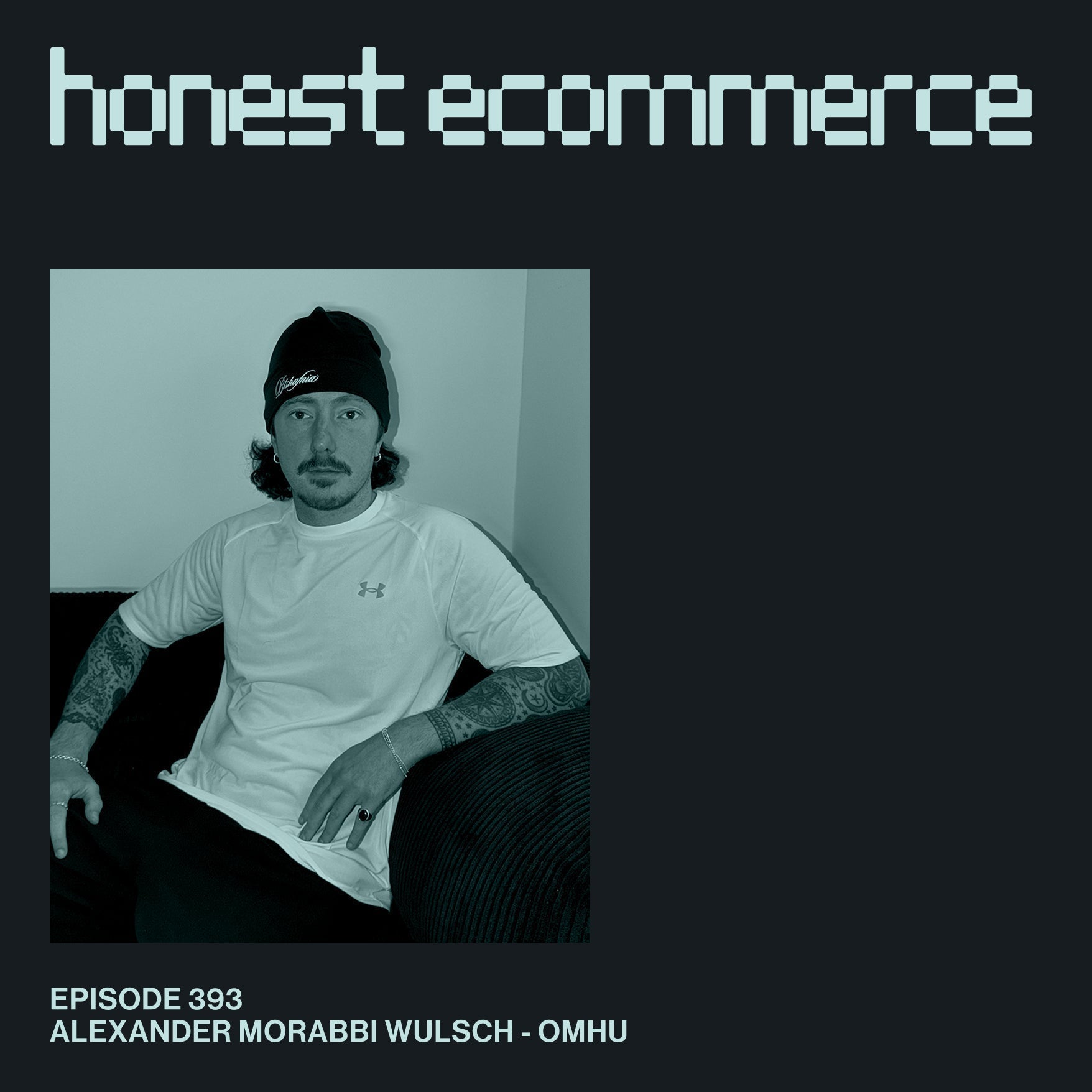
Hey everybody, welcome back to another episode of Honest Ecommerce. Today, finally, welcoming to the show an amazingly smart gentleman. Alex is joining us from Omhu. How are you doing today, Alex?
Absolutely. Technical difficulties aside, we're gonna do this. Alex is the CMO over at the Copenhagen-based sofa company Omhu. They're very well known for their viral sofa, the Teddy Sofa. Alex, for those that don't know about this super cool sofa, can you give us kind of the elevator pitch about this awesome product?
Alexander Morabbi Wulsch
Very good, Chase. Thanks for having me.
Sure. So I'm the CMO here at Omhu, and we are known for the Teddy Sofa, which is one of our hero products. It's basically a modular, multifunctional sofa that turns into a conversation pit that you can use for many different things. Most people have it in their living room or their office space. It also turns into a bed. We have it in many different colors, many different kinds of setups, and yeah, we're selling it online through a D2C model, with a lot of success.
Chase Clymer
Absolutely. So take me back in time. Where does your story start with Omhu?
Alexander Morabbi Wulsch
So going back a little bit further, I started my first Ecommerce company when I was a teenager still, selling socks online. Did that for a couple of years, raised a lot of money on Kickstarter, sold internationally, and then failed with that business. Went to the Dragon's Den and raised money from investors, all of that. Took all my learning, started an agency, which was the first TikTok agency in Scandinavia, built that for five years, and it was acquired by a larger agency where I spent some time.
And then about two years ago, I was contacted by the CEO of Omhu, and he asked if I wanted to join this super cool journey where we're basically trying to redefine how it's being done in the furniture and sofa business globally. So I started two years ago, coming in as the sixth employee. We were really, really early on. Some good traction, but no processes, no structure in the business. And since then, I've been building out the team and the strategy, and yeah, just growing a lot these last two years. It's been fun.
Chase Clymer
That's awesome. You got such a fun story. And for the listeners that don't know, Dragon's Den is Europe's version of Shark Tank over here in the States, right?
Alexander Morabbi Wulsch
Yeah, so actually in Denmark where I'm from, it's called the Lion's Den. But yeah, in the UK it's Dragon's Den, and then in the US it's Shark Tank.
Chase Clymer
What's funny is in the US the Lion's Den is a sex shop.
Alexander Morabbi Wulsch
Okay. Yeah, well, I haven't been in that yet, but maybe that'll be for a later stage in my life. I'll try that out.
Chase Clymer
Absolutely. All right, so talk to me about the lessons learned from your first online business. You said that it failed, you had some success via Kickstarter. So what were the biggest lessons learned? Or maybe now, looking back on it, where do you think things might have gone wrong, or what could have gone better? Or was it just, you know what, it wasn't a good business model?
Alexander Morabbi Wulsch
So we started that around 2014, 2015, when Meta ads were still really taking off, and it was Facebook ads at the time. I learned a lot about social marketing at the time, and I think we actually did quite well marketing-wise. But what I really learned was the importance of unit economics. We were selling socks, which, you know, some players in the industry have had success with, but it's very hard to scale to size due to the very low AOV.
So it can be a high-margin business, but it's very difficult to push volume because you need so many customers. It's good for retention, it's good for storage, it's good for shipping, but AOVs are way too low. So I think that was a really big learning for me, that unit economics matters so much when you're doing an ecommerce business. And also just understanding that at the time, before AI and technology was that developed, you needed so many human resources. So trying to figure out how to build a scalable engine with as few people as possible, that was a really big learning as well.
It was difficult at the time. We started on Magento, then we moved to WooCommerce, and then we ended up on Shopify, which I'm still very happy using today.
Chase Clymer
Yeah. Do you remember what the AOV for that business was when you guys decided to hang it up, and then what's the AOV over at Omhu now?
Alexander Morabbi Wulsch
Yeah, well, it was around fifty USD, and now it's over a thousand USD, so it's definitely a different kind of business.
Chase Clymer
For a layman, for someone that this concept of unit economics is new to them, how can you explain it to them in a simple way that makes them understand why it's important, especially when you're selling direct to consumer online?
Alexander Morabbi Wulsch
So the way we work with it, which is very standard in the industry, is that you basically have a bunch of cost centers and lines. So we have revenue coming in, and then we're paying some kind of discount on that. There's some kind of VAT or tax. We know what those numbers are always because of our discounting strategy and how sales are distributed across markets. Then we have the cost of goods sold, the COGS. We know what they are, we know what the return rates are, we know what the sales and marketing costs are, and the overhead costs and the salaries, and the shipping cost.
And then at the end we get to the bottom-line profit. And that's really what we're steering our business from. I think, unit economics-wise on ecom, what really matters the most, I've learned, is margins are super important, AOV is really important. Those are the two things that create the foundation. And then your job as a marketer is to deliver the highest possible conversion rate. And then, of course, retention. You really want to have a product or business that people keep coming back to in some way or another, so that you're not always just chasing net-new customers.
So those are the things I'd look at today. And then from a practical standpoint, is it easy to ship? Can you ship globally? How much space does it take up in the warehouse? This is one of the reasons why supplements, beauty, skincare are doing so well, because it's really, really cost-efficient from a logistics and supply chain perspective. It's a different game in the sofa industry, I can tell you, but that's also something that's really important to consider.
Chase Clymer
Do you know what's going on with Klaviyo? When is the last time you explored what it can do? Klaviyo has been shipping tons of new AI, data, and automation features designed to help ecommerce teams move faster, personalize better, and automate more of the work that used to take entire teams. Most brands are only using a fraction of what is already inside their Klaviyo account.
Klaviyo is not just email and SMS anymore. It is your customer data platform, your lifecycle marketing engine, your analytics layer, and now your AI-assisted execution layer, all in one place. That means your customer data updates in real time, your segments stay current automatically, your flows and campaigns all run off the same source of truth. And now AI can help predict churn risk, forecast spend, recommend next-best products, generate campaign content, and optimize send timing across channels.
The big unlock is speed and efficiency. There are fewer tools to manage, less dependency on engineering, less time moving data between systems, and a lower total cost of ownership across your marketing stack. And brands are seeing real results from leaning further into Klaviyo. Dollar Shave Club has reported over a 30% reduction in total CRM stack costs after consolidating onto Klaviyo. Brands like ThirdLove have seen a 15x ROI from SMS after consolidating channels. And companies like Corkcicle have grown flow revenue over 90% after bringing email and SMS together inside Klaviyo.
Across our customer base, almost every single brand we work with today is using Klaviyo. That is just where serious ecommerce customer data and lifecycle infrastructure is living these days. If you're already on Klaviyo but you feel like you're not getting everything you can out of it, or you're just running multiple tools and want to simplify without losing power, I think this is worth your time. You should head on over to Klaviyo.com/honest to learn more. That's K-L-A-V-I-Y-O.com/honest to learn more about what Klaviyo can do for you today.
The examples you just gave, skincare, beauty, supplements, they also lend themselves really well to bundling and cross-selling and upselling, because each individual item is a bit cheaper and you can definitely stack that value. How do you and the team approach bundling or an upsell, or just how do you increase the AOV on such a higher-end, flagship product?
Alexander Morabbi Wulsch
Yeah, so it's definitely a challenge, and I think we're still trying to figure out the best way to do it. But we do also sell pillows. When people buy a sofa, they need pillows, maybe they need an extra cover. We have interchangeable covers so you can change the color of your sofa. Maybe you want an extra piece, maybe you want a more modular setup with more pieces, maybe you want to configure your own setup. I think there are many ways to do it.
But it's definitely not as easy as when you're selling skincare, where you have like a hundred products and many of them are complementary.
Chase Clymer
Yeah, but if it's easy, then anyone can do it, and that's the challenge of building a successful business. Now let's talk about the virality of the sofa, and I'm assuming this ties in a bit with your previous agency and your knowledge of TikTok. So just walk me through your guys' social strategy and how it's taken off.
Alexander Morabbi Wulsch
Yeah, so we always say that we're social-first, and it's something that we're very focused on. Social media is by far the biggest line in our marketing budget. We work with what we call the influencer flywheel, which is basically just three channels. Influencer marketing is something we use to get reach and awareness and drive conversion, but also to generate content. That content goes into a paid media machine, which then in turn drives more awareness and conversion.
And then we take the best of that content and publish it through organic social channels. And I think this is a very popular model today. Many big businesses are doing it as well, but I think where many fail is that they don't really double or triple down on it, really scaling on social specifically. We've gotten really, really far in the Omhu business just by focusing on influencer marketing and then using that content to scale, rather than investing a lot in SEO or PPC, trying to nail generic brand or search terms and Google Ads and Shopping and so on. I think that's never really been a big priority for us, because we believe much more in building community and brand. I think that's what social media can do, it can really create demand. It's the only channel that can do it at scale, where you can really double your budget from one day to the next.
So that's how we're looking at it. It's the majority, everyone working in marketing here is working on social media in some way.
Chase Clymer
Absolutely. And it's something that I see oftentimes, what separates successful startups from unsuccessful ones, is that they pick a channel and just absolutely crush it. I feel that, obviously there's always exceptions to this, but I think that sometimes people at the start of the brand are trying too much at once, and it's such a shotgun-spray approach of strategy, and you're not necessarily giving any one channel enough attention to let it shine.
And so, you know, it's always refreshing, and also I've heard it on this show dozens of times before, it's like, just find something to be really good at and just do it. Like you said, people aren't doubling down on the things that work. They find something that works and then they want to go find something else that works. But you're saying, no, we're just making these relationships with these influencers, these influencers are providing us content, and we're putting money behind that content, and that's the whole strategy. And I think that's what people need to hear. It doesn't matter what that one thing is that you're doing, if it's working, just keep doing it until it isn't. Run it until it isn't profitable anymore and then pull it back a little bit.
Alexander Morabbi Wulsch
I think that's very true, and a lot of CMOs and growth marketers come to that realization at some point. It's like when you're not growing fast enough, you're always looking at new markets, new products, new channels, and those things are important. But if you're spending, let's say, 80 or 70% of your marketing budget on one channel, why not just try to get one, two, three, four, five percent better at that all the time?
I think influencer marketing is a really good example of that, because today influencer marketing cannot be fully automated. It is still a very manual process. It requires people, relationships, and negotiations, and that's not something you just turn up with a button. So that's something you need to hire for and build. I think something that I learned on this journey is that we were too slow on that. I'm so used to, "we just spend more on Meta," or "we just launch this product, start this new channel." But building up a big and efficient influencer team is something that you always need to be working on, always adding more people as you scale and optimizing that as a channel as well.
Chase Clymer
What is the next big idea that could change your business? A pricing change? A new bundling strategy? Adding subscriptions? Tweaking your shipping offer? Most brands make these decisions based on gut feel. They roll out the change, hope for the best, and have no real idea if it helped or hurt their business.
Intelligems fixes that. It is an AI-powered testing platform that brings CRO-level clarity to the decisions that actually move the needle, not just button colors and headlines, but the big stuff: pricing, offers, shipping, new apps, even major site changes. Brands like Ridge, Jones Road, and True Classic are using Intelligems to test their most important decisions and see exactly how each one impacts profit before they commit. Momofuku used it to test promotional offers ahead of Black Friday and found the version that increased profit by about 28%. Mott & Bow ran structured pricing tests that drove roughly 30% more incremental profit. We use it at Electric Eye with almost every client we work with.
And now Intelligems has a free AI-powered audit that gives you three specific ideas that you can test on your store today. No commitment, no credit card, just three opportunities worth exploring. Head to intelligems.io/audit and get your free audit in just a few minutes. That's intelligems.io/audit.
Now, something else that you do over there that I applaud is you have a zero-discount strategy, which is oftentimes in marketing, or advertising, or just on the revenue-generation side of a business, discounts are the first thing people go to try to get customers excited about making the purchase. So where did that line in the sand come from, and then how do you guys navigate that?
Alexander Morabbi Wulsch
That's right, we have a pretty strict zero-discount policy. We do run some quarterly funnel-clearing events. We're more playing around with stuff like free shipping or maybe a gift-with-purchase setup, but we generally don't discount our products. And the reasoning behind that, it actually mostly just comes from experience. I've worked with over a hundred ecommerce companies throughout these last twelve, thirteen years. I've seen way too many of them fall into the discounting trap.
We discussed ways of growing, products, markets, getting better at channels. At some point, when you can't grow anymore, it's just an easy lever to pull: let's just discount and get that revenue in. But if you really adhere to the P&L, or the gross-profit setup where you're looking at your unit economics, you'll quite quickly see that it's a very bad move. Sure, you're gonna sell a lot more, but none of that really matters. In Ecommerce today, it all comes down to the bottom line, and that's what you want to optimize toward.
And I think there is, of course, an equilibrium in that chart where it makes sense, I'm not saying nobody should run discounts. But when you have a high-AOV item, you have a long customer journey, a long consideration phase, and you have a brand that you're trying to build and increase brand equity on, I think zero discount is just the right move. There is not a single case I've ever seen where discounting benefits a brand. It can only wear it down.
Chase Clymer
Yeah, it really is something that you need to make a choice about at the beginning of the business, which direction you're gonna go with stuff, because I've found, you'll talk to brands that do have a discounting strategy, it basically trains the customer to wait until there is a discount. And I will say, I am right now waiting for a brand that I like to have their summer sale to buy something, because I've just been trained to do that.
And so that's one of the reasons, but then I think people just default to it because it's easy. And you already mentioned some of the ways people, oddly enough, aren't necessarily buying on price. They're buying on value, and those are completely separate ideas. And you mentioned other ways to provide value without cutting the price, which was free gift with purchase and free shipping, two of the easiest ways to do it. Bundling is another way to value-stack. There's all sorts, it just takes a little bit more effort, and maybe that's why people don't do it.
Alexander Morabbi Wulsch
I mean, like I said, it's not easy to find out how to value-stack or offer something in the best way without discounting, but that's the good thing about ecommerce. Every time you try something new, you learn from it, you get the data, and then you adapt based on that.
Chase Clymer
You have prepped all year, and all that hard work is paying off. Your store is converting, the ads are working, and this is shaping up to be your best holiday season. But your 3PL can't keep up. Orders are backing up, customers are asking where their stuff is, the reviews are starting to turn. All that hard work, all that momentum, undone by a fulfillment partner that can't scale with you. This is a nightmare scenario, and it happens to brands every holiday season.
Enter eFulfillment Service. eFulfillment Service is the 3PL that scales with you. They are family-owned, they've been in business for over 25 years, and they're built specifically for growing direct-to-consumer brands. There are no setup fees, no minimums, and no long-term contracts. You only pay for what you use. If you're scared your 3PL can't keep up this holiday season, now is the time to reach out to eFulfillment Service. Go to efulfillmentservice.com/honest and get up to eight weeks of account fees completely waived. That's efulfillmentservice.com/honest.
You kind of mentioned this earlier, that you've got, it is a high-ticket item, it's over a thousand bucks, and that lends to a longer decision cycle, a longer customer journey. Do you have any idea how long that customer journey is, how long that decision cycle is? How do you market for something that, I don't know how long it takes, but it's probably multiple touchpoints over multiple months.
Alexander Morabbi Wulsch
Sure. So we, like any respectable ecommerce business, run a post-purchase survey where we ask our customers a bunch of questions. And one of the early ones that we got a lot of insight into quite quickly, I'm not even sure we ask it anymore, because now we know, is how long did it take from when you first heard of us till you made your purchase. So we have that data, and yeah, it's definitely a lot longer than for many other types of businesses.
There's a lot of consideration that goes into buying a new sofa, timing, saving up money. You spend more time researching, you maybe want to try it in the real world, you read more reviews, you're maybe a bit more skeptical. So I think it's super interesting working with a long-customer-journey product in ecom. We often compare it to selling cars, I think that's maybe the extreme, but the car industry has been really, really good, for decades, maybe hundreds of years almost, at figuring out how to build a funnel over decades and then be top of mind and just build that brand. And then when people are in the market for a car, they buy it.
Even though now it's changed over these last ten years, people are switching brands more than they did before, it's still kind of the same principle, right? At some point you're gonna need a car, and then you have a couple of preferences, and then you take a look at them, and then you make a decision. And that's kind of the game that we're playing as well.
Chase Clymer
Absolutely, that makes sense. Now, I know when we spoke, also just an FYI for everybody, Alexander and I met at ShopTalk Europe in Barcelona. Shout out to ShopTalk, shout out to conferences, they're a great place to meet smart people, when we had met there, you had mentioned that you guys are looking to break into the States a bit more and increase the market over there. So currently, I can buy the product in America, right?
Alexander Morabbi Wulsch
Yeah, we ship to almost all states, and we launched last year, and it's been an epic ride.
Chase Clymer
What are some of the learning curves of being a European brand trying to break into the American market? 'Cause we've heard the other way around a few times on the show.
Alexander Morabbi Wulsch
Yeah, so for sure it's difficult, and I think a lot of brands have tried and failed coming from Europe going into the US. There are many learnings. If I had to highlight a few, I think just the sheer size and scale of the US as a market. It's a bit hard to comprehend when you come from a city or country of five million people.
Chase Clymer
America's huge, it's so big.
Alexander Morabbi Wulsch
So, you know, we have a really good core business here in some of these European markets, and we're doing well. But approaching the US, there are so many ways to do it. Do we start on the East Coast? Do we just start in New York? Do we just start in LA, or Austin, or whatever? Or do you just go broad and let the algorithms do their thing? I think it's been really hard for us to nail that.
And then also understanding that building trust as a brand that's not American in the US is a whole different game. Like when you're selling to Germany from Denmark, the German people trust Danish companies. They know what Denmark is, and not just that it's a country, but also what it stands for, what our culture is like, what kind of businesses we have. And I think there's a huge culture barrier where, even though we produce in the United States for the American market, we're still a Danish company.
And there are not a lot of Americans that know a lot about what it means to be Danish, or run a business in a Danish way, and it's not necessarily a strong selling point. It might be for some, Scandinavian design, Danish design, but that's a very, very small, specific audience, and our audience is quite broad. So yeah, just how to buy media and how to target it, do we divide it into regions, do we divide it into states, cities? There are so many approaches.
And then also adapting to the culture, branding and content, I think that's been such a difficult line to walk, because we're trying to build a global business where we want consistency across continents. And we're quite bold, and we're doing some pretty wild things, and maybe some of them are a bit more of a risk to the broader American audience. But we kind of want to stick true to it. So walking that line, figuring out how do we adapt our marketing and our branding efforts to the US market, yeah, I think that's definitely an ongoing learning curve.
Chase Clymer
Hey everybody, just a quick reminder, please like this video and subscribe if you haven't. We're releasing interviews like this every week, so don't miss out. Now back to the interview.
Are you working with a local partner in the States to help with some of the copy, or some of the ways to market? That's something I heard actually at ShopTalk a few times when I was speaking with other brands, they were like, "We're looking for a media-buying partner over there to confirm our assumptions or point us in the right direction," because it is just such a different place.
Alexander Morabbi Wulsch
We have had, of course, some help with it, but I think all in all, the model and strategy is the exact same. It's copy-paste. We're doing the same media split, we're doing the same, of course the content will vary, the assets and key visuals and so on, but the overall strategy and our fundamentals are as they are. And I think we want to learn this ourselves and also get the data from that. So we run almost everything here from our office in Copenhagen. Then we'll have some partners for some things that maybe require some more cultural insight or market-specific insight. But no, I think we're generally quite independent when it comes to that.
Chase Clymer
Well, if your partners can understand why Americans think the way they think, they'd be a great partner. We have a lot of interesting opinions over here.
Alexander Morabbi Wulsch
Yeah, and very varied opinions. And you know, there's also the whole thing about politics. We're not a political company, but I would say in some ways our marketing is quite out there, bold, and some would maybe say progressive.
That's also been hard to navigate, because it's really important in the US, and you see a lot of brands that are kind of piggybacking on some kind of political angle, or tapping into some kind of community where politics play a role. And I think that's also just something you have to think about. Maybe our culture here is something that can be either super positive or offensive, you need to understand the culture when you go into a big market like this.
Chase Clymer
Absolutely. Yep. Is there anything I didn't ask you about that you think would resonate with our audience today?
Alexander Morabbi Wulsch
No, but I often get asked for input and tips, and I work on some advisory boards, and I think generally what I always try to push is really doubling down on the social-first strategy. I still think influencers and creators are super under-leveraged, and I think they are a great tool and channel to test out if you have product-market fit. Something I usually tell people is that if you don't have influencers contacting you inbound, and you can't scale that, then you don't have a strong product, or maybe your price is too high compared to other things. But influencers are a really good way of validating if you have product-market fit.
And of course, if you're a fashion brand or apparel, it's different, because you need to build a brand. But still, you can often sell products. And I think, even though brand is important, and I'm a very brand-first marketer, I also always try to say that there are also ways to scale on product and not brand. And I think that's something that a lot of Ecommerce businesses are still struggling with, not really being good at product-led ads, pain points, USPs, unboxing, all of that. It can really take you far without having a brand. I think that's a big shift that we're seeing in the industry now, that you have big players coming out without a brand that are doing really well.
Chase Clymer
Yeah, I kind of have an interesting opinion on that. Especially, at the agency we work with a lot of younger companies, and some people still have this odd idea of being like, "That's not on brand." And I always kind of want to push back. I was like, you don't have a brand. No one knows who you are. So what we're doing here is just experimenting and trying. It's like Coca-Cola, Apple, they have brands. A sub-million-dollar brand that's just getting their feet wet out there selling their new product, they have a logo, but that's not necessarily a brand.
Alexander Morabbi Wulsch
I think those kinds of considerations or concerns are maybe quite relevant when you have a big, established, and profitable business, because a big part of your revenue comes from existing customers, and they buy into some kind of brand. But when you're just starting out, you should not be saying those things. You should only focus on doing anything you can to scale and become profitable.
Chase Clymer
Yeah, that's also kind of my whole North Star with young companies, it's usually like, just go and sell. Stop doing the busy work of a big, fancy logo book or super custom web design. Go sell your product. Go figure out what it is that resonates with your audience. Find out how to market that more to the correct audience. And then, in time, all these other things will fall into place.
Alexander Morabbi Wulsch
Completely agree.
Chase Clymer
Awesome, Alexander. If I'm listening to this podcast and I want to check out the Teddy Sofa, where should I go? Which I do.
Alexander Morabbi Wulsch
Well, we're a social-first brand, so I'd recommend checking us out on Instagram first. I think that's where you can get a pretty good sense of the product and the brand, at least that's how we use it. We see it as being almost as important as our ecommerce platform and site. But just Omhu on Instagram and you'll find us. And yeah, I think there's a lot to learn, hopefully, for other ecommerce people out there in terms of what we're doing and how we're doing content and building community and so on.
Yeah, so go and give us a follow, and I'd love some feedback. So if anyone out there listening is thinking we should be doing something differently, I'd love to hear from them.
Chase Clymer
Awesome, Alex, we'll make sure to link to that stuff in the show notes. Thank you so much for coming on today.
Alexander Morabbi Wulsch
Yeah, thanks for having me, Chase.